Marine Neurotoxins
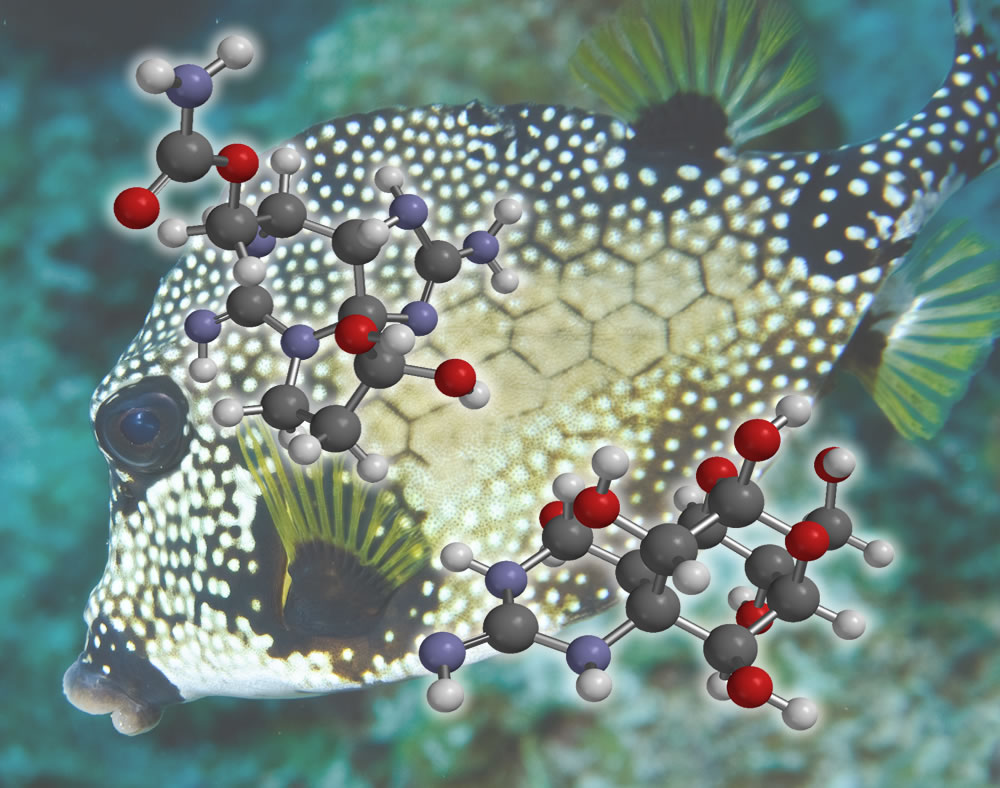
The oceans are home to a remarkable variety of natural toxins that have evolved for defense, hunting, or competition. Among the most potent are marine neurotoxins, compounds that interfere with the function of nerve cells by disrupting the transmission of electrical signals. Although their chemical structures can differ greatly, many act on the same molecular targets, such as ion channels in nerve cell membranes, leading to paralysis or other severe neurological effects. Two of the best-known examples are tetrodotoxin and saxitoxin, which are described in the following sections.
Tetrodotoxin – One of the Ocean's Most Powerful Neurotoxins
Tetrodotoxin (TTX) is one of the most potent naturally occurring neurotoxins known. It has been found in a surprisingly wide range of marine animals, including pufferfish, blue-ringed octopuses, several species of newts and frogs, some marine worms, crabs, starfish, and even certain bacteria.
The toxin is best known from the Japanese delicacy fugu, prepared from several species of pufferfish. Because the highest concentrations of tetrodotoxin are found in organs such as the liver, ovaries, and skin, the fish may be prepared only by specially licensed chefs in Japan. Their extensive training is essential, as even a small mistake can have fatal consequences.
The name tetrodotoxin originates from the fish order Tetraodontiformes, which includes pufferfish, triggerfish, filefish, and their relatives. However, the toxin is by no means restricted to this group. It also occurs in organisms as diverse as the blue-ringed octopus (Hapalochlaena spp.), several species of gastropods, and other marine invertebrates.
The occurrence of the same toxin in such unrelated animals strongly suggests that tetrodotoxin is generally not synthesized by the animals themselves. Instead, the current evidence indicates that toxin-producing symbiotic or associated bacteria are the primary source, with the toxin accumulating through the food web. Supporting this hypothesis, pufferfish raised under controlled conditions on tetrodotoxin-free diets can become non-toxic.
How Does Tetrodotoxin Work?
Tetrodotoxin is a highly selective neurotoxin. It binds with extraordinary affinity to voltage-gated sodium channels in nerve and muscle cells, preventing sodium ions from entering the cell membrane.
Without this influx of sodium ions, nerve impulses cannot be generated or propagated. As a consequence, muscles lose their ability to contract, leading to progressive paralysis. In severe poisoning, the respiratory muscles are affected, and death may occur through respiratory failure if intensive medical treatment is not available.
Remarkably, tetrodotoxin does not usually affect consciousness. Victims may remain fully aware while becoming progressively unable to move or breathe, making the toxin particularly dangerous.
Despite its extreme toxicity, tetrodotoxin has attracted considerable scientific interest. Because of its highly specific action on sodium channels, it has become an invaluable tool in neurobiology for studying how nerve cells generate electrical signals. Researchers are also investigating whether carefully controlled doses could have applications in the treatment of severe chronic pain, although no widely approved medical use currently exists.
For divers, the most important message is simple: admire these fascinating animals, but never handle them. Their brilliant colors or unusual appearance often serve as a warning that powerful chemical defenses are present.
Saxitoxin – The Cause of Paralytic Shellfish Poisoning
Saxitoxin (STX) is another highly potent naturally occurring neurotoxin. Although its chemical structure differs completely from that of tetrodotoxin, the two toxins act in a remarkably similar way: both block voltage-gated sodium channels in nerve and muscle cells, preventing the transmission of nerve impulses and leading to paralysis.
Saxitoxin is best known as the cause of Paralytic Shellfish Poisoning (PSP), a potentially life-threatening illness that results from eating contaminated shellfish. Mussels, clams, oysters, and scallops are filter feeders and can accumulate the toxin while feeding on microscopic algae. Because the toxin is heat-stable, cooking does not make contaminated shellfish safe to eat.
Unlike tetrodotoxin, which is primarily associated with pufferfish and a few other marine animals, saxitoxin is produced by certain species of dinoflagellates and, in freshwater environments, by some cyanobacteria. During harmful algal blooms—often referred to as "red tides", although the water is not always visibly red—these microorganisms can multiply rapidly, leading to high toxin concentrations in shellfish and other marine organisms.
The toxin may also accumulate in other animals that feed on contaminated prey, including some species of pufferfish and crabs. As the toxin moves through the food web, it can affect a wide range of marine organisms.
How Does Saxitoxin Work?
Saxitoxin binds with very high affinity to voltage-gated sodium channels on the surface of nerve cells, blocking the passage of sodium ions into the cell. Without this ion flow, electrical signals cannot be generated or transmitted, resulting in numbness, muscle weakness, and paralysis.
The first symptoms of Paralytic Shellfish Poisoning usually include tingling of the lips, tongue, and fingertips, followed by numbness and, in severe cases, progressive paralysis. If the respiratory muscles become affected, the poisoning can be fatal without prompt medical support.
Because of its highly selective action on sodium channels, saxitoxin has become an important research tool in neurobiology, helping scientists understand how nerve cells generate and transmit electrical signals.
Fortunately, monitoring programs in many countries routinely test commercially harvested shellfish for saxitoxin and related toxins. When toxin levels become elevated during algal blooms, shellfish harvesting areas are temporarily closed to protect public health.