Guadalupe Dive Sites Map
1 dive site, 20 photos
Click the map to enable scroll-wheel zoom. Switch on “Water depth shading” and click anywhere for the approximate depth, “Seafloor relief” for sonar-surveyed areas, or “Nautical marks” (zoom in) for harbours, wrecks, buoys and lights. Depth data (GEBCO grid of roughly 450 m; GMRT only where ships have surveyed) and nautical marks (OpenSeaMap) are for orientation only, not for navigation or dive planning. Pin positions mark the start of the dive (boat anchor or entry point), not the exact spot underwater. Zoom out to see dive sites of other locations: grey pins are dive sites without photos, flags are dive centers. Pale pins show an approximate position (nearby dive center or dive area).
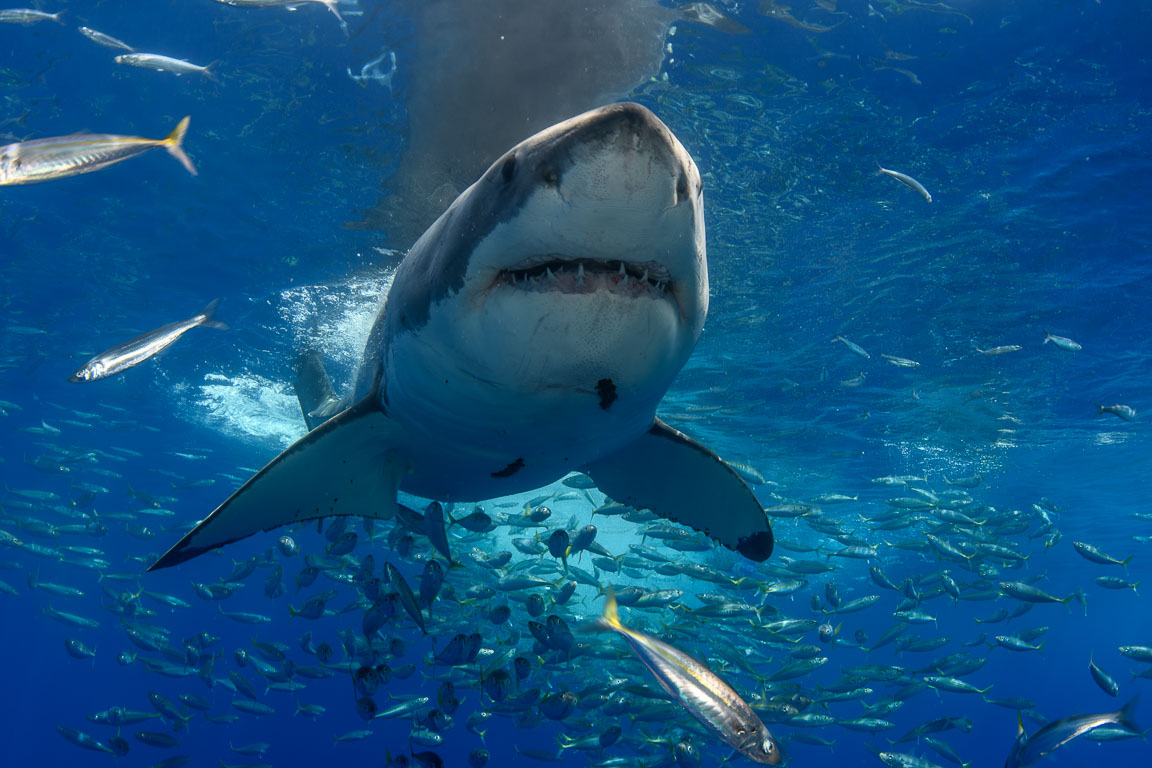
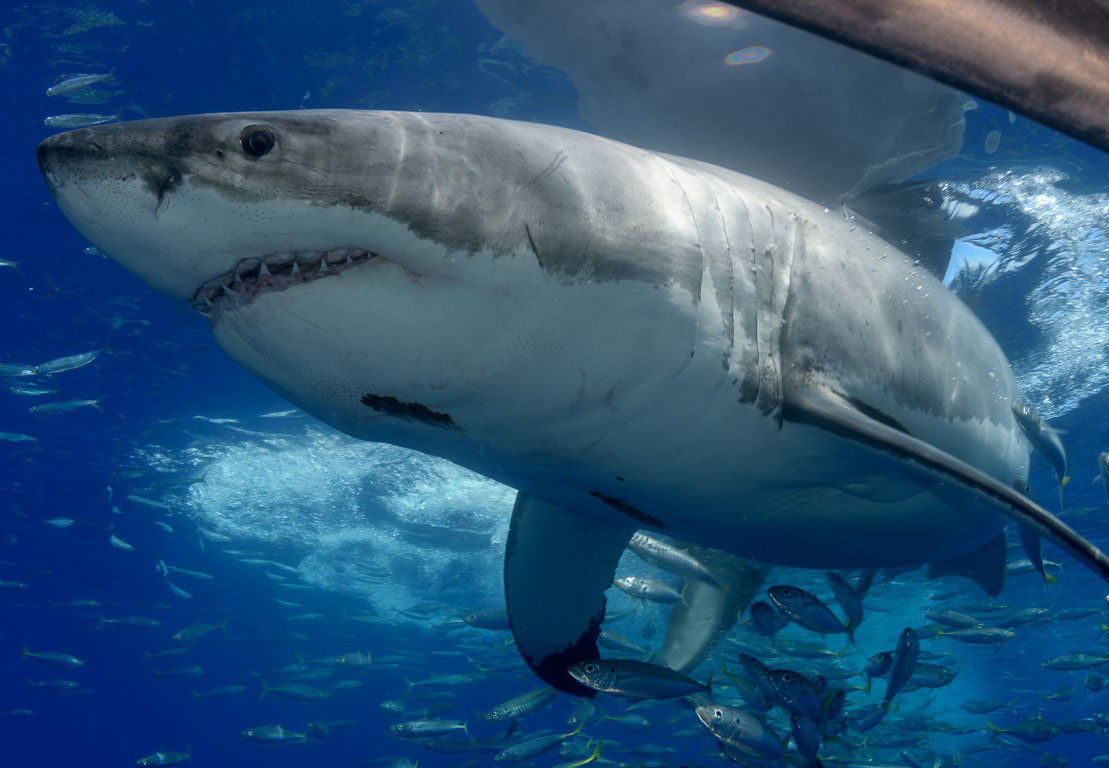
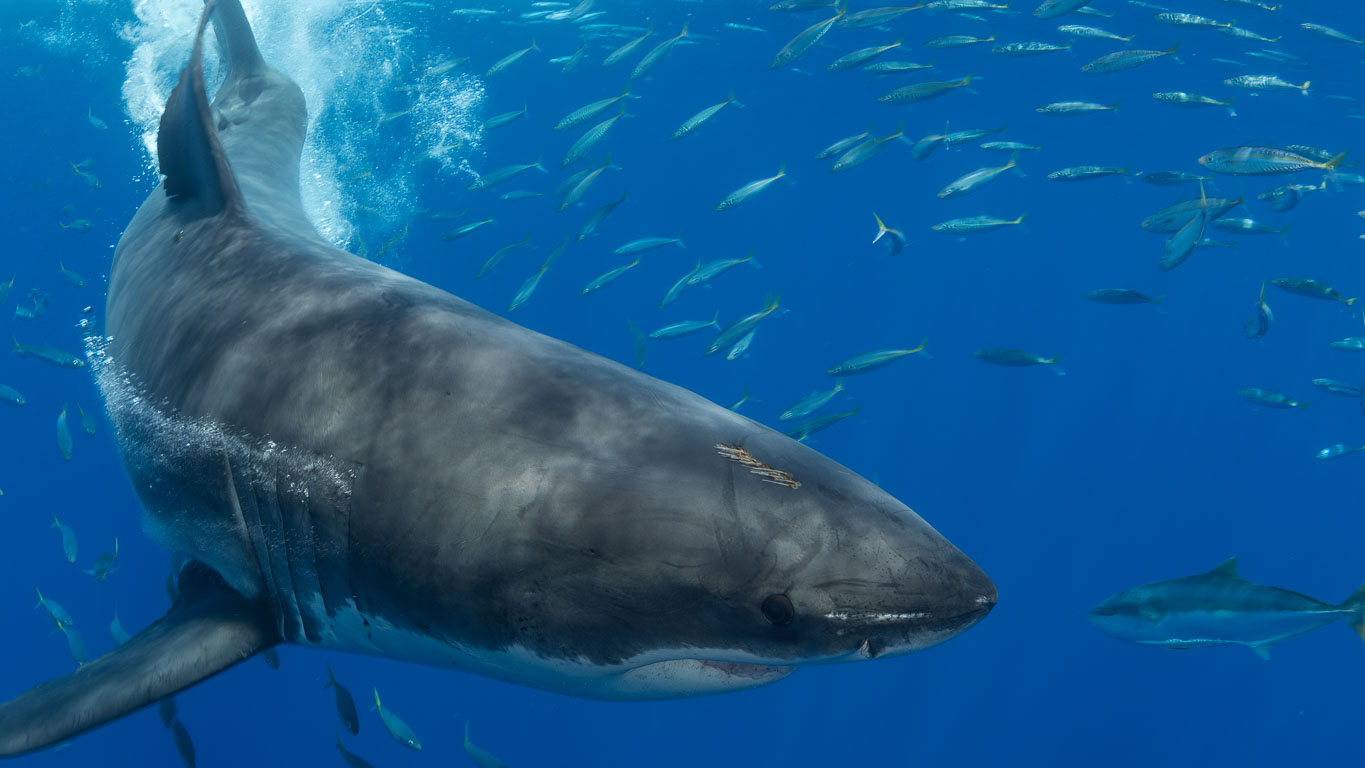
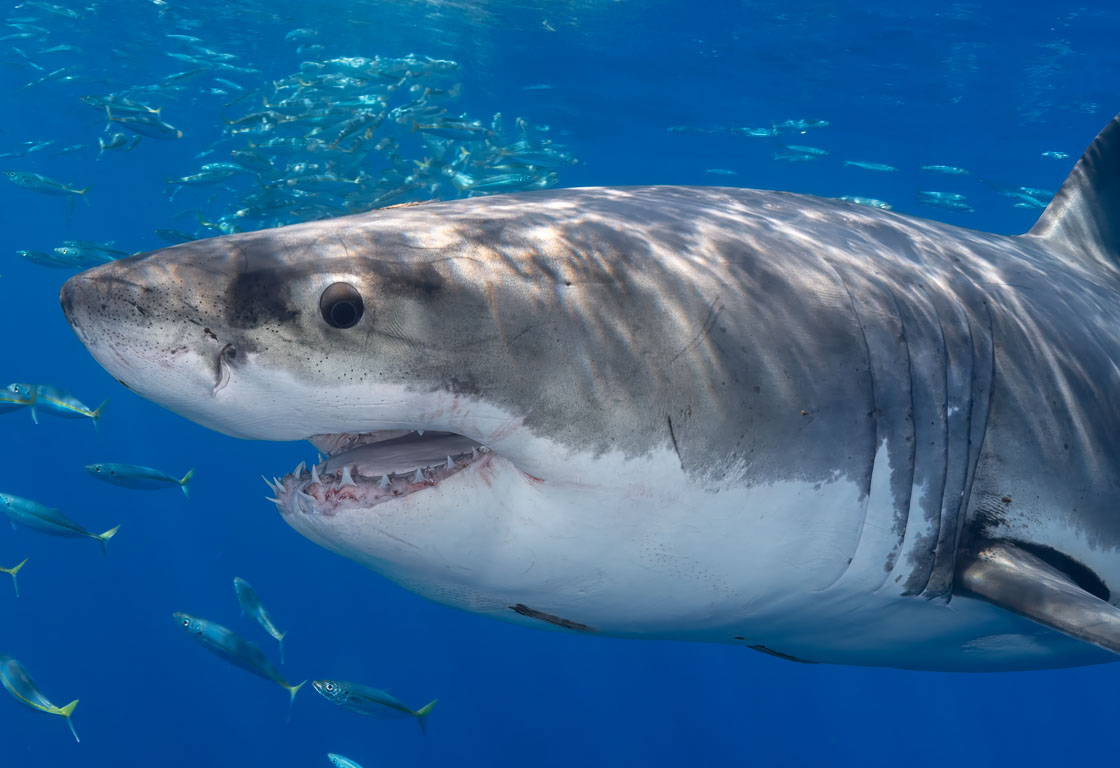
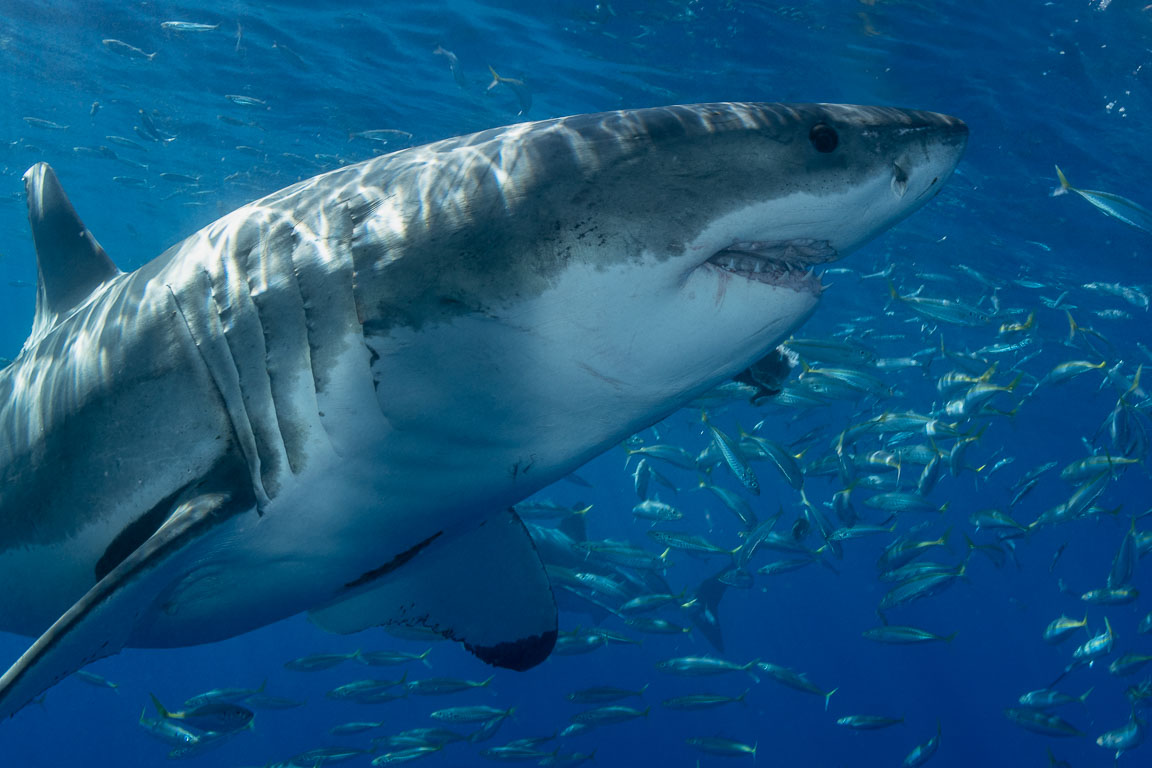
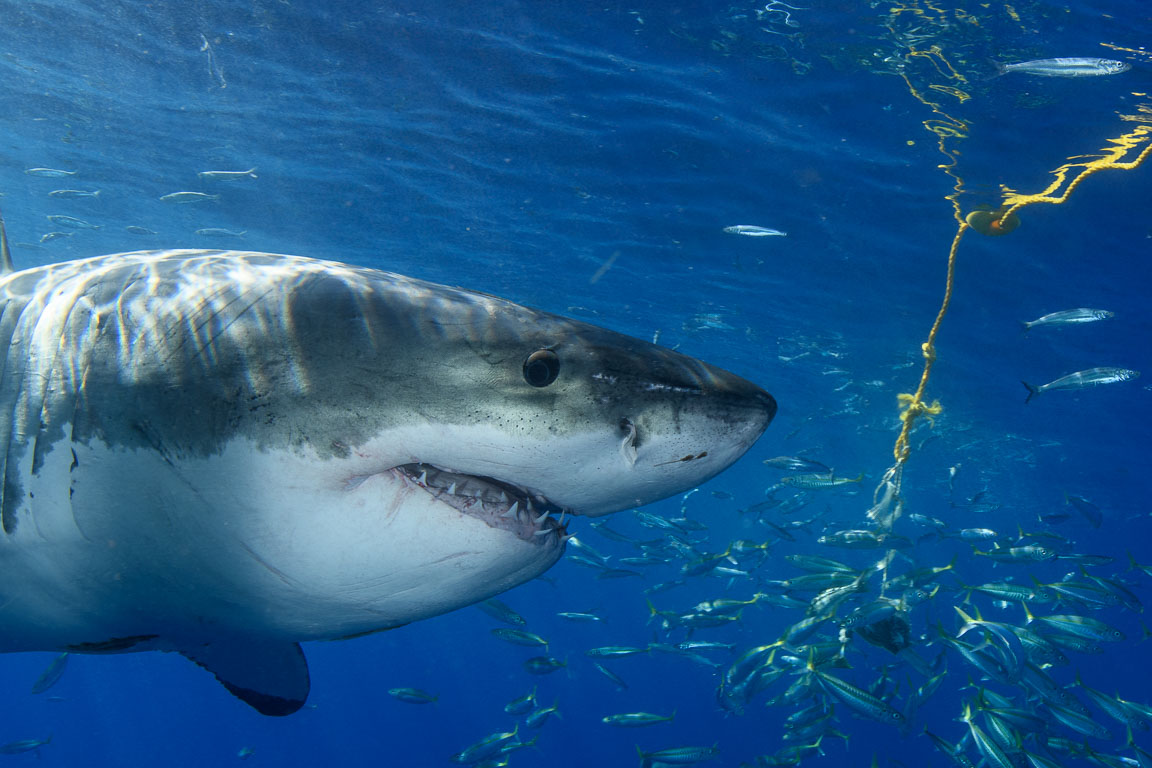
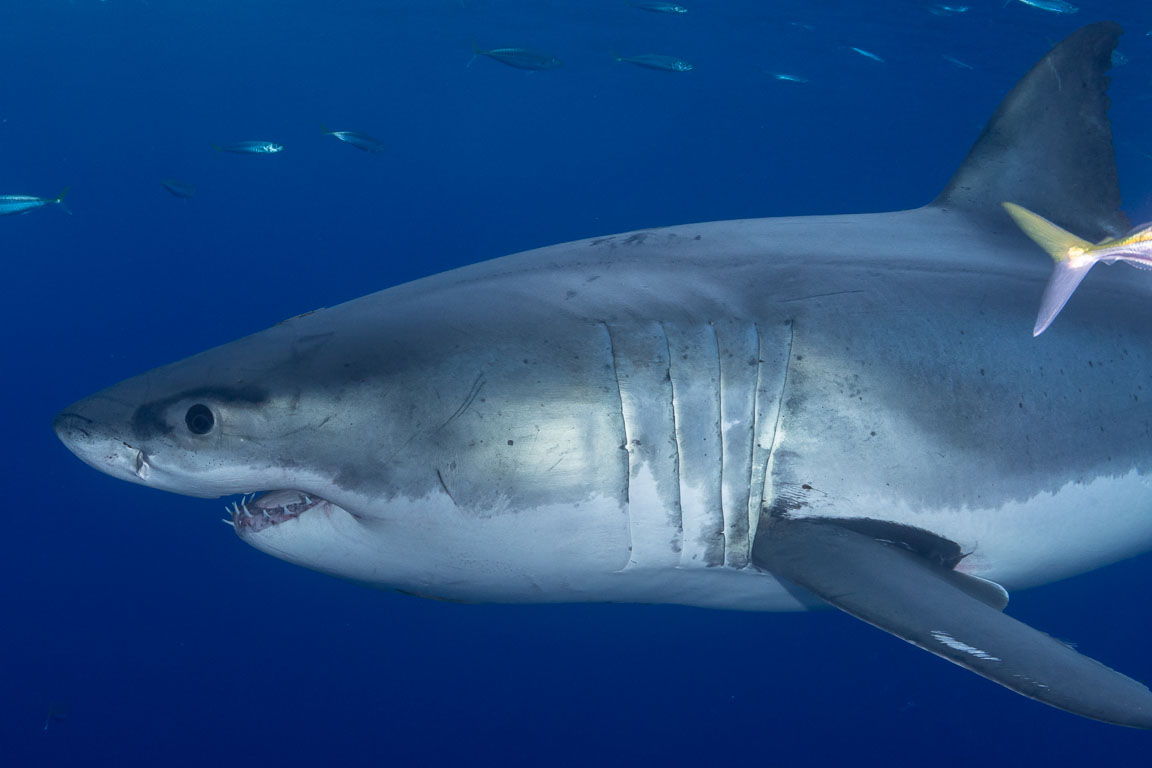
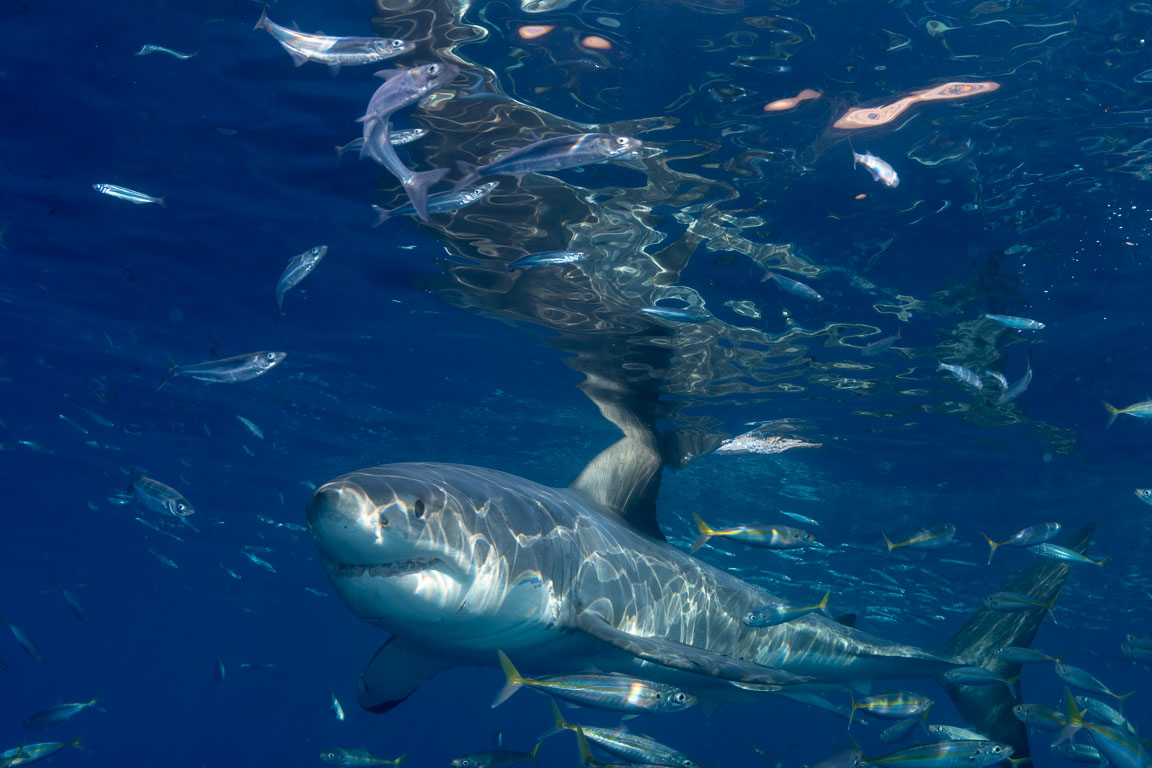
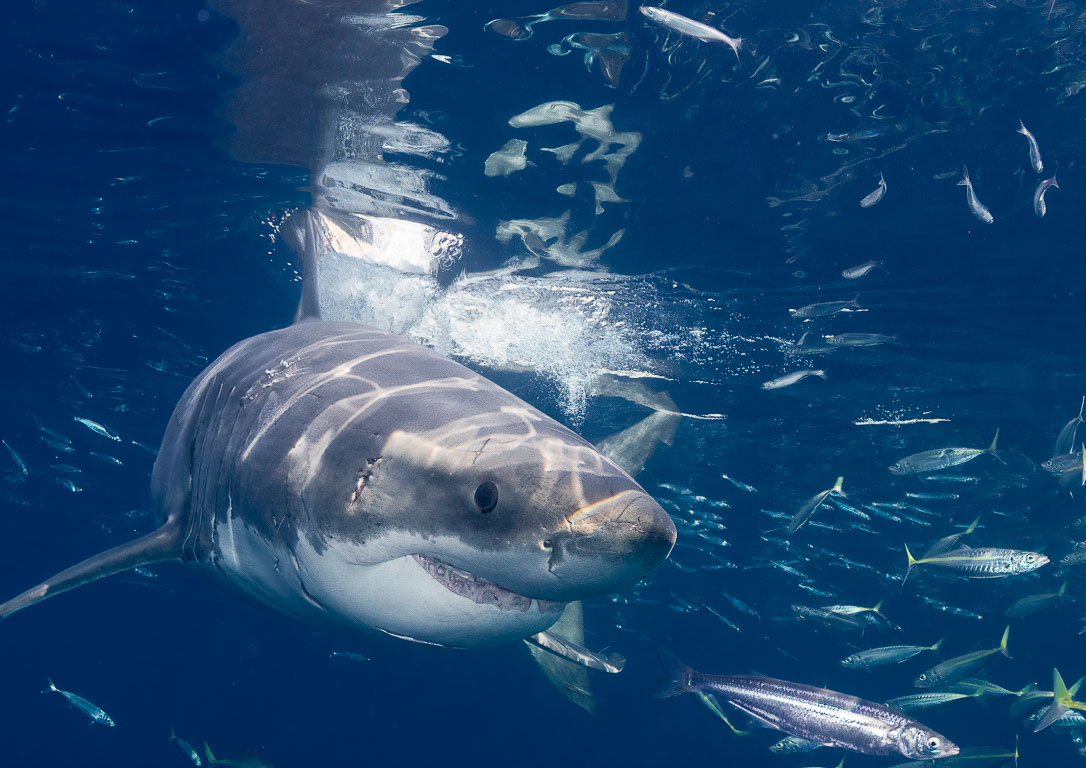
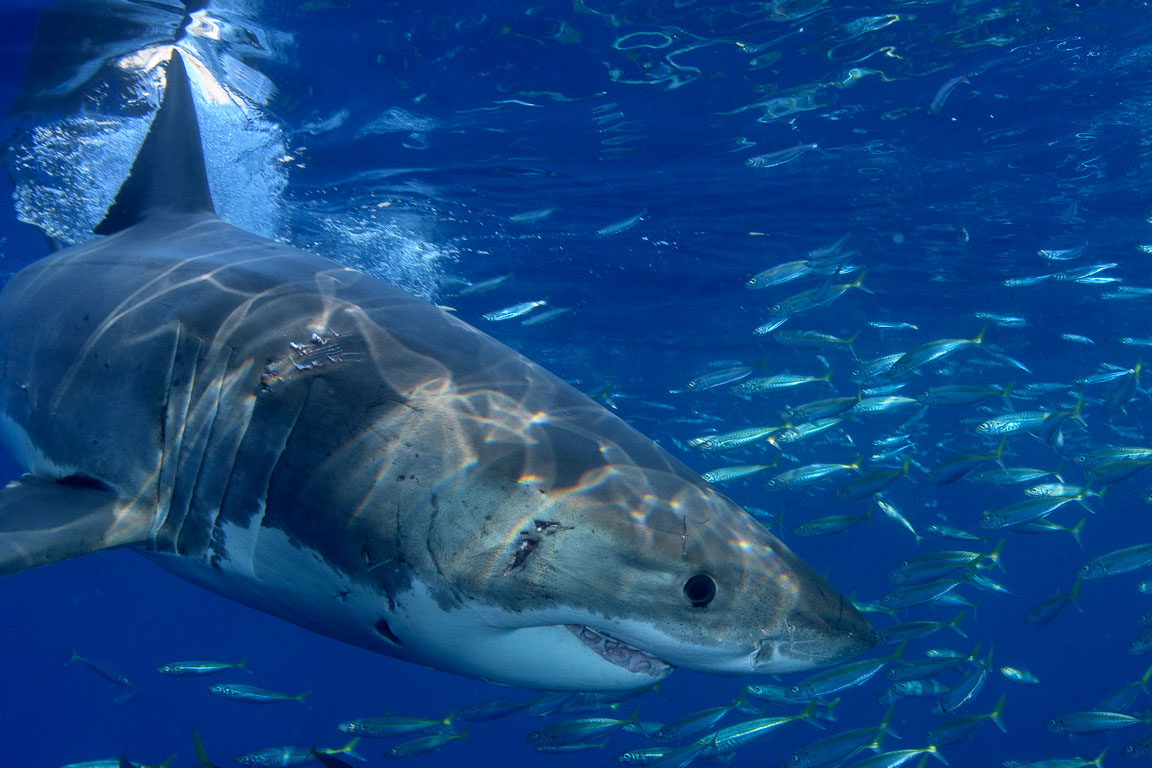
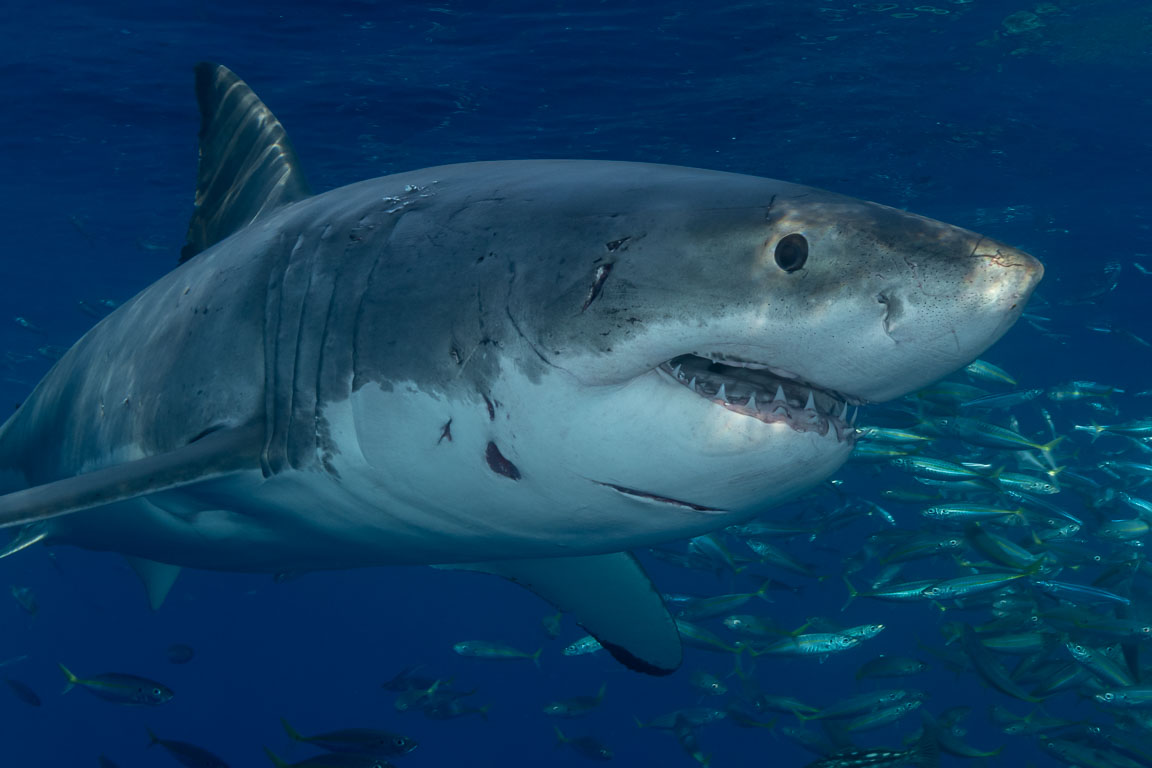
Diving with Great White Sharks at Guadalupe Island, Mexico
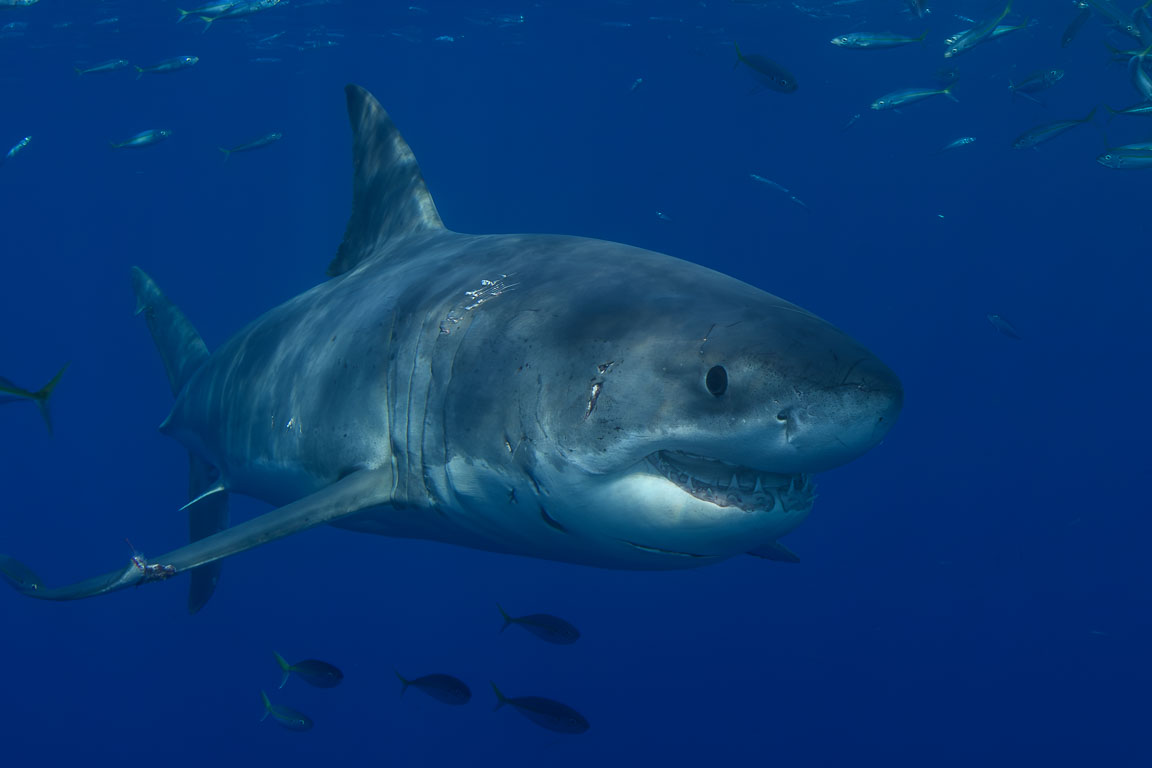
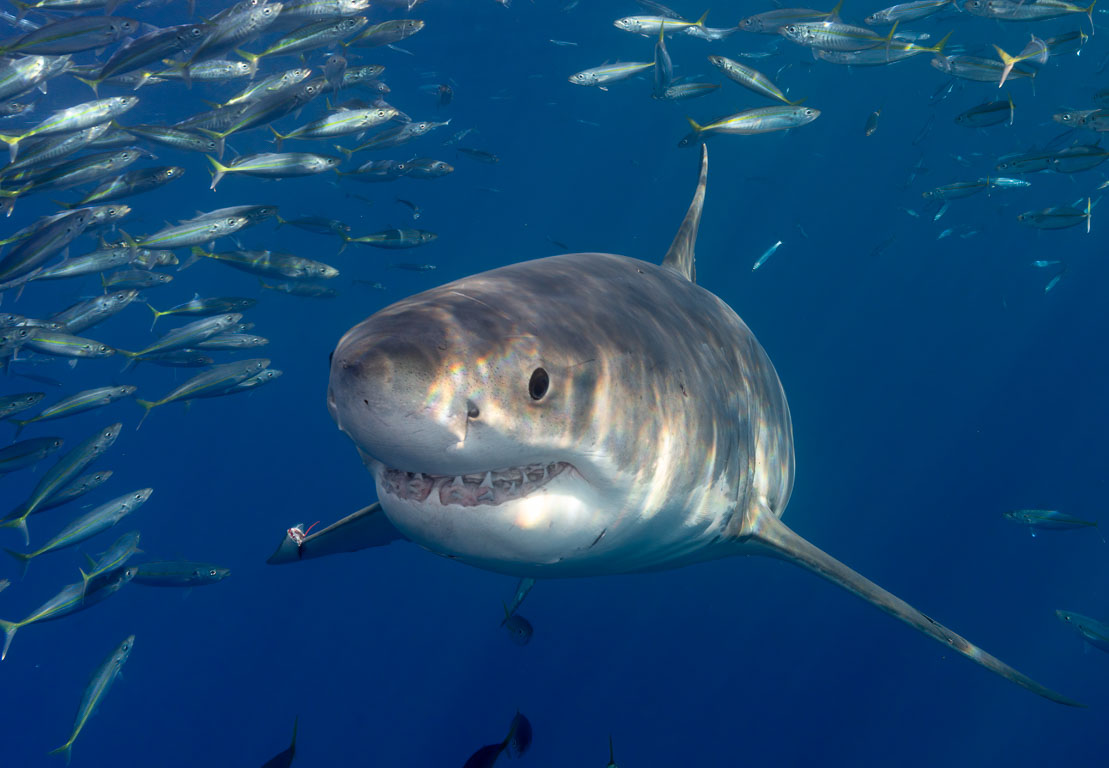
In 2019, I joined a great white shark diving trip to Guadalupe Island, Mexico, organised by Nautilus Adventures. Guadalupe lies far off the coast of Baja California and is almost uninhabited. The island is part of a protected national park area, and access to land was prohibited for visitors. Diving and shark encounters were strictly regulated by the Mexican authorities.
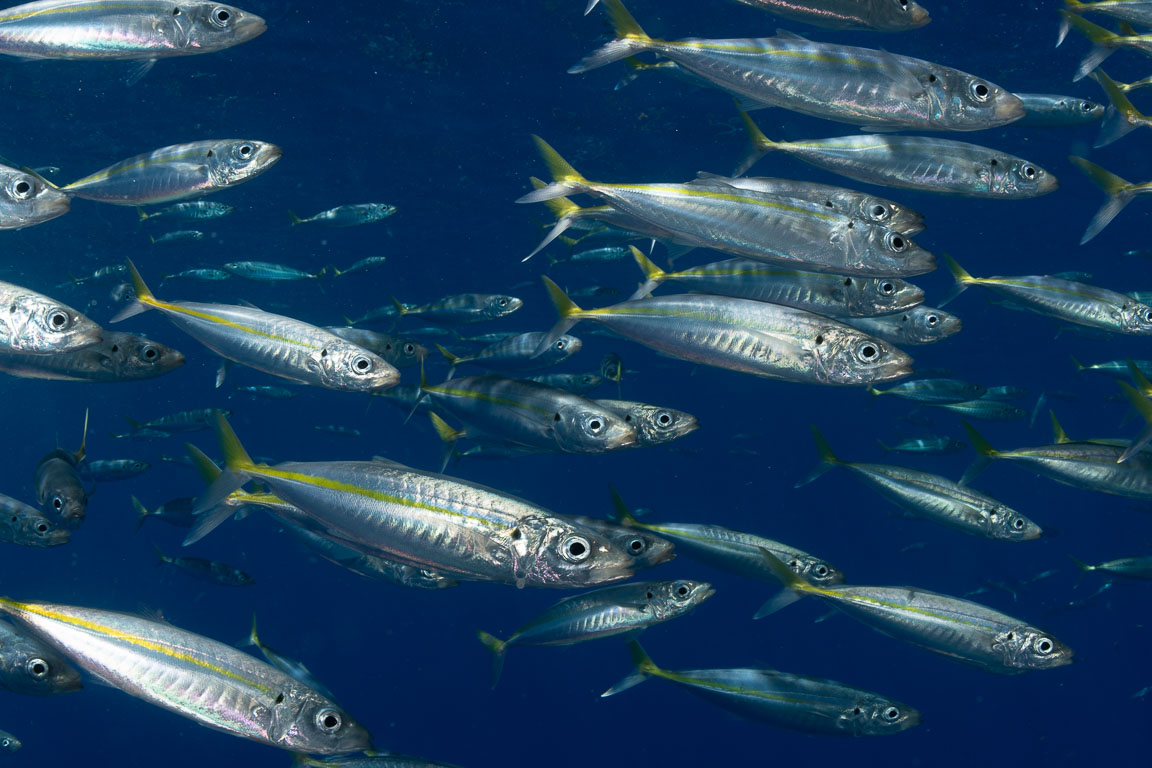
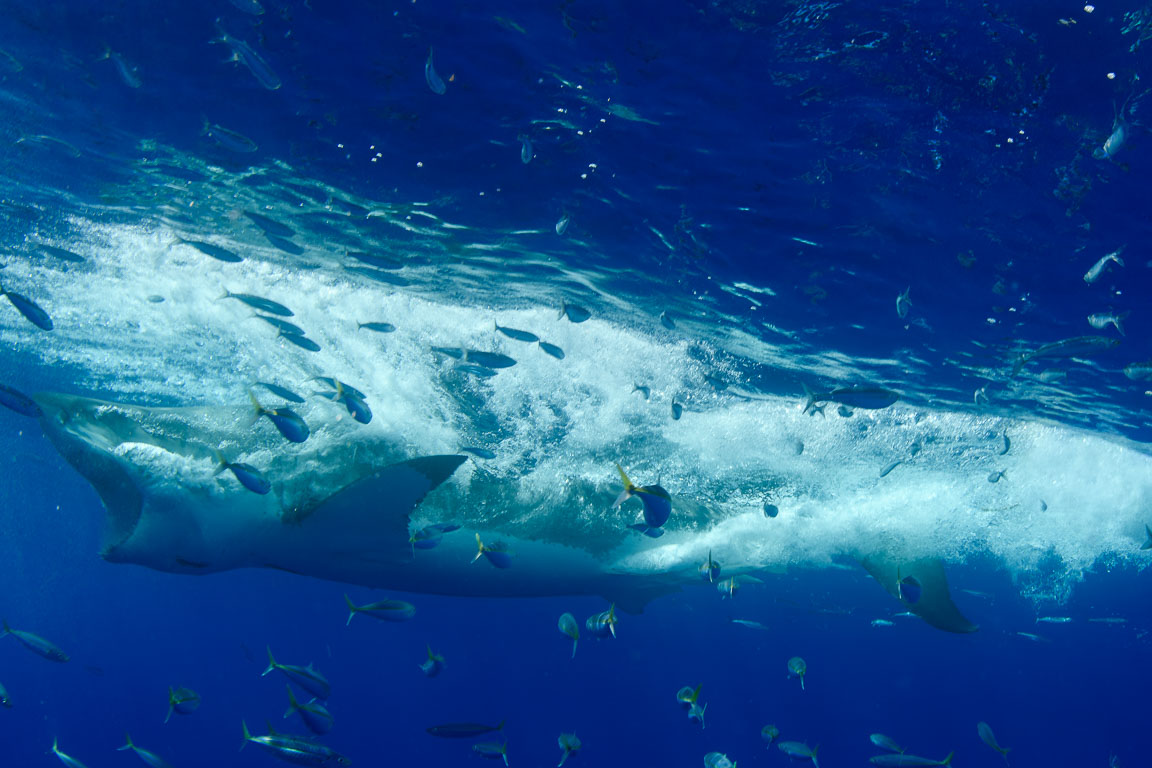
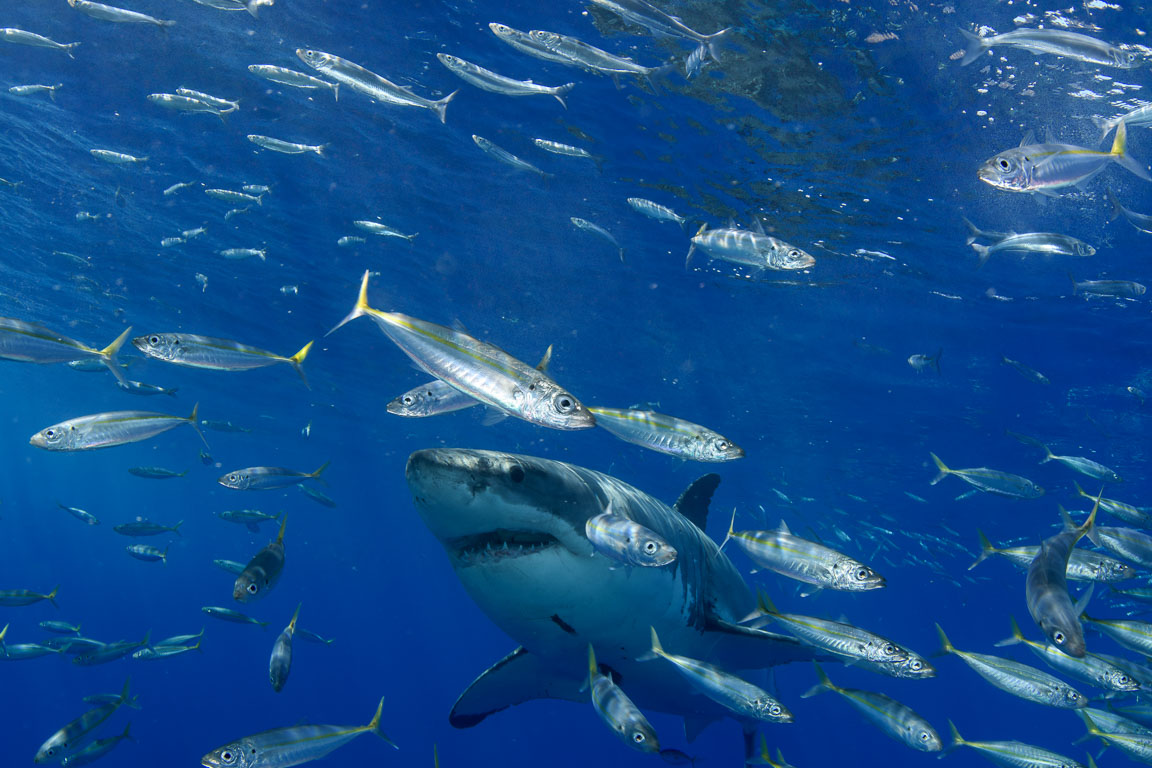
There are only a few places in the world where great white sharks can be observed safely underwater from cages. Well-known examples include the Neptune Islands in South Australia and Gansbaai in South Africa. At the time of my visit, Guadalupe was regarded as one of the best sites because of its often very clear water, with visibility frequently exceeding 20 metres. Another reason was the regular presence of many individual sharks around the island. Several hundred great whites have been identified there over the years, many of them known by name. The sharks visit the area seasonally, attracted in part by the colonies of northern elephant seals and Guadalupe fur seals.
The regulations were important for protecting the sharks and their habitat. Guadalupe was also a significant location for shark research. Projects such as Marine CSI worked in the area, using photo identification and other methods to study individual sharks, migration patterns, and behaviour.
The trip started from Ensenada aboard the Nautilus Explorer, a comfortable liveaboard used for the five-day expedition. The boat was well suited for this kind of trip, with enough space for guests and a professional setup for cage diving.
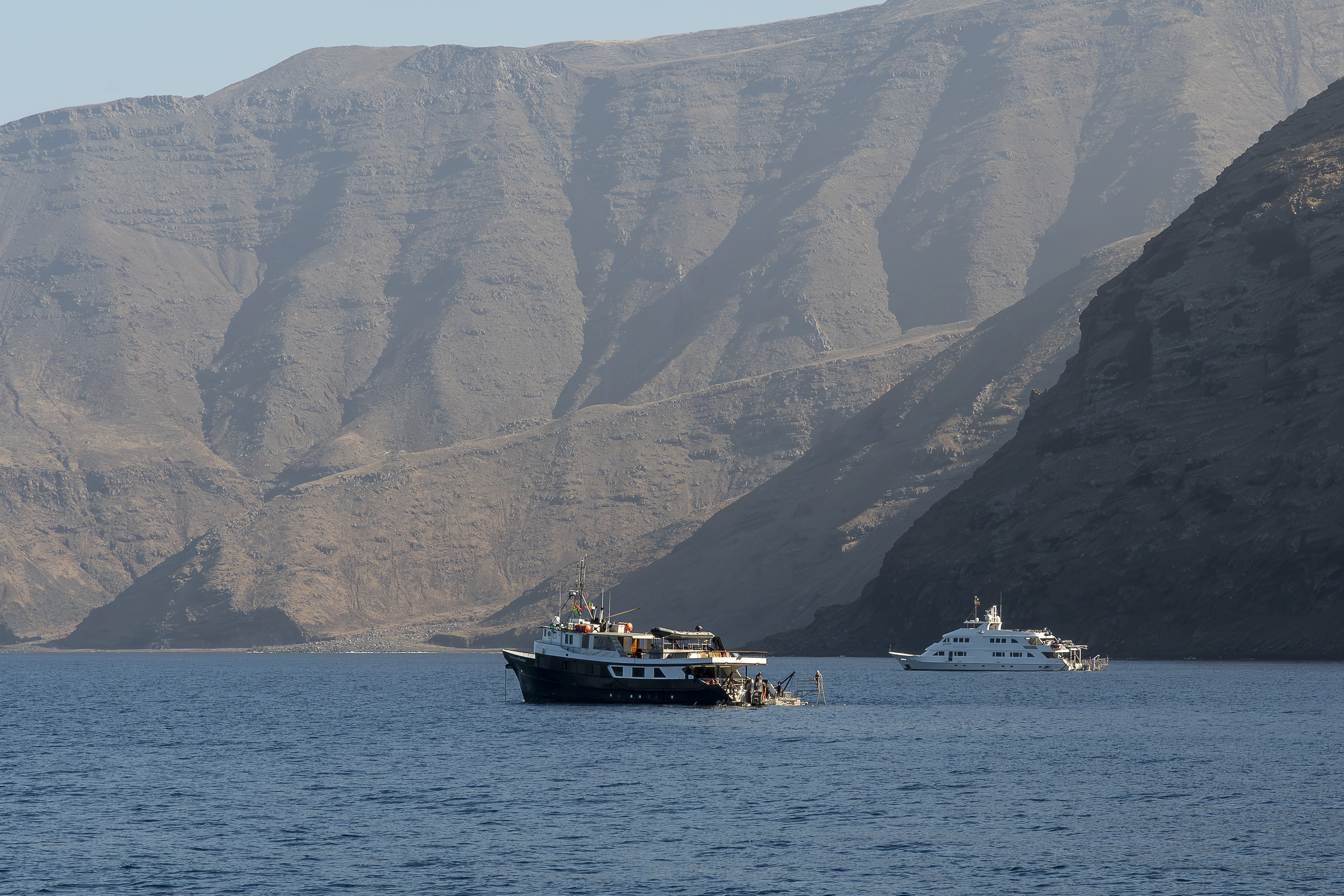
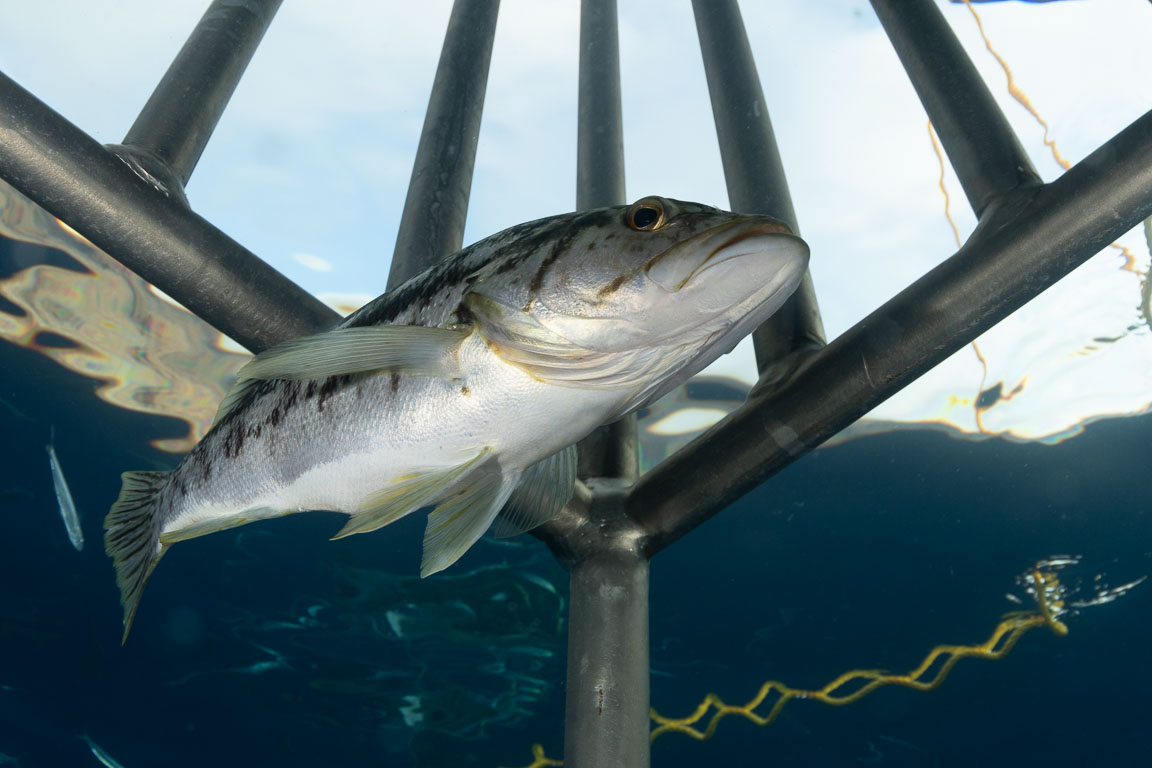
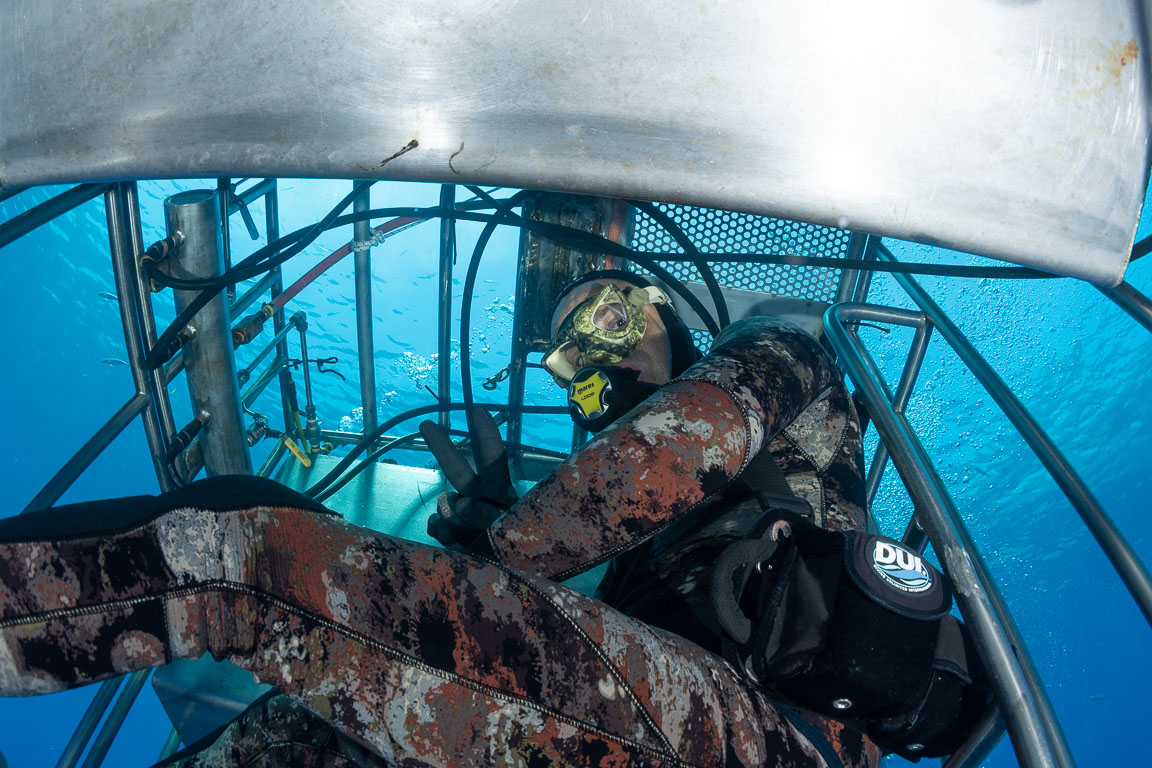
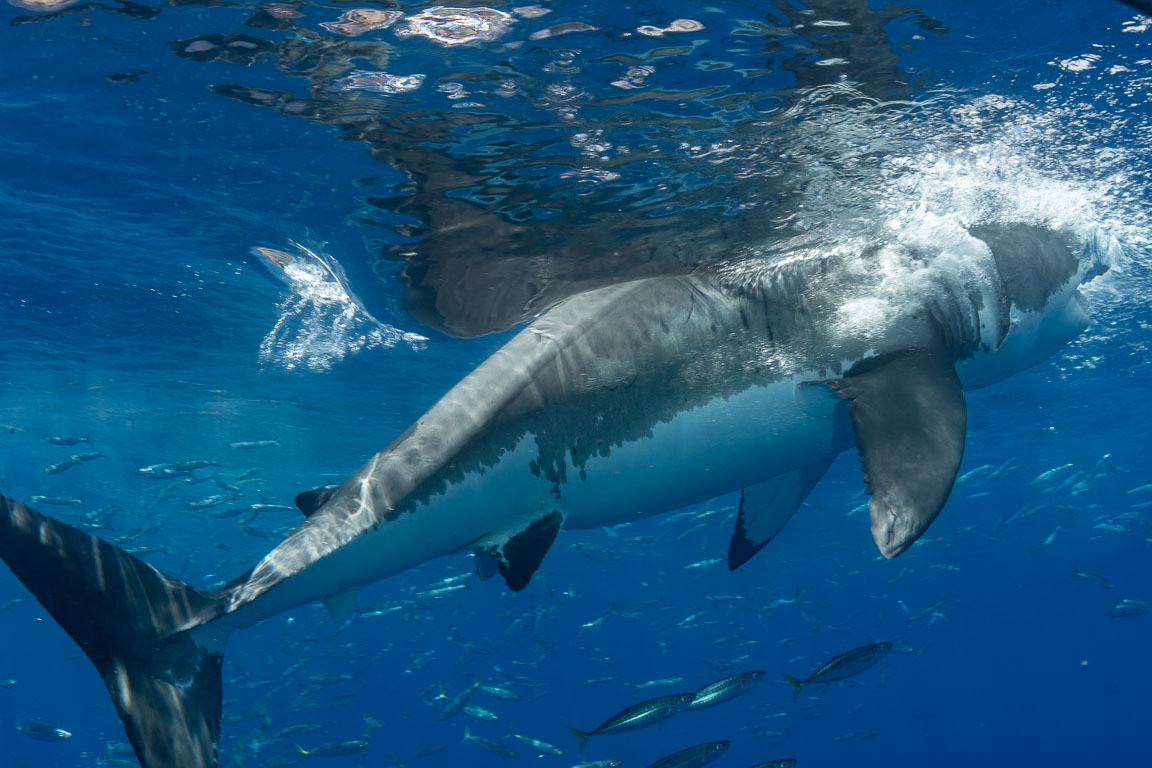
The diving was done from cages. Surface cages could usually be used without fixed schedules, making it possible to spend long periods in the water watching the sharks. On one day, I spent almost seven hours in the surface cages. This was a good way to observe the animals calmly and for an extended time.
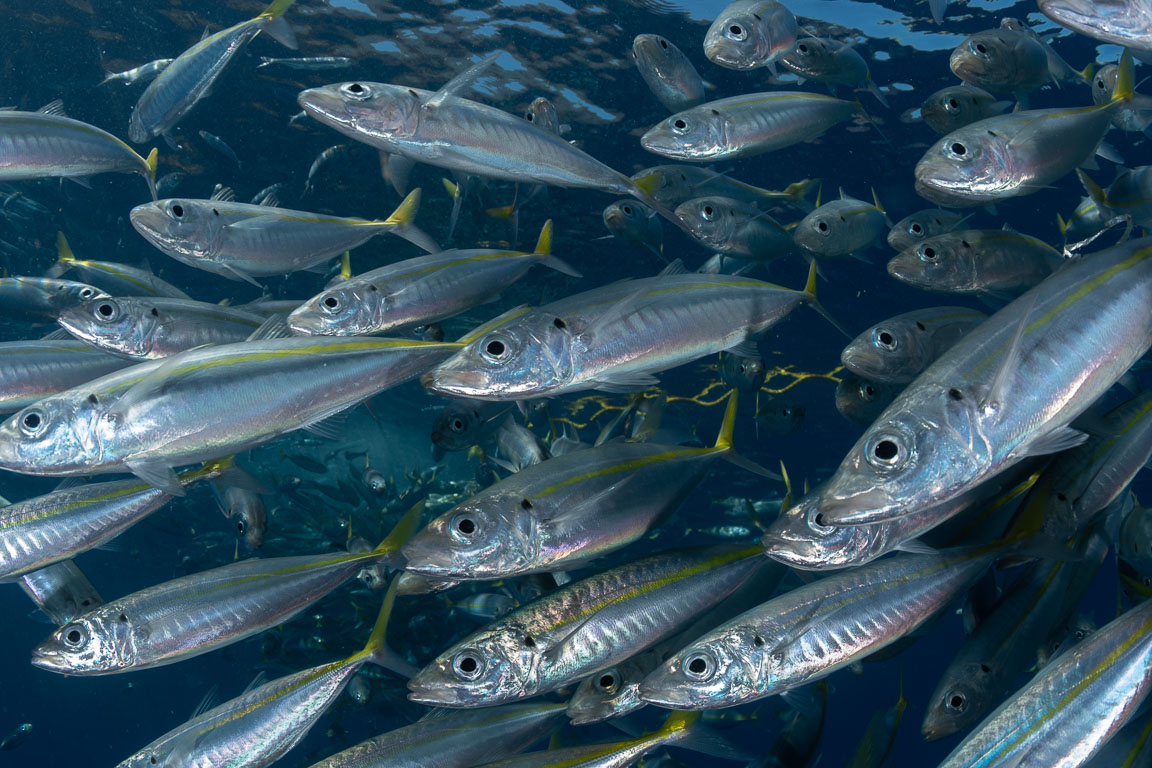
In addition, the boat offered submersible cages twice a day. These cages were lowered to around 10 metres and gave a different perspective, with the sharks passing by in deeper blue water. Seeing great white sharks from this depth felt less like watching from the surface and more like being part of their environment.
Guadalupe was one of the outstanding places to see great white sharks underwater, especially because of the clear water and frequent shark encounters. At the same time, it was a place where strict protection rules were essential. Controlled access, scientific research, and regulated cage diving helped keep the focus on the animals and their conservation.
Since 2023, Mexico has closed Guadalupe Island to great white shark cage diving. This text therefore describes the situation during my visit in 2019.